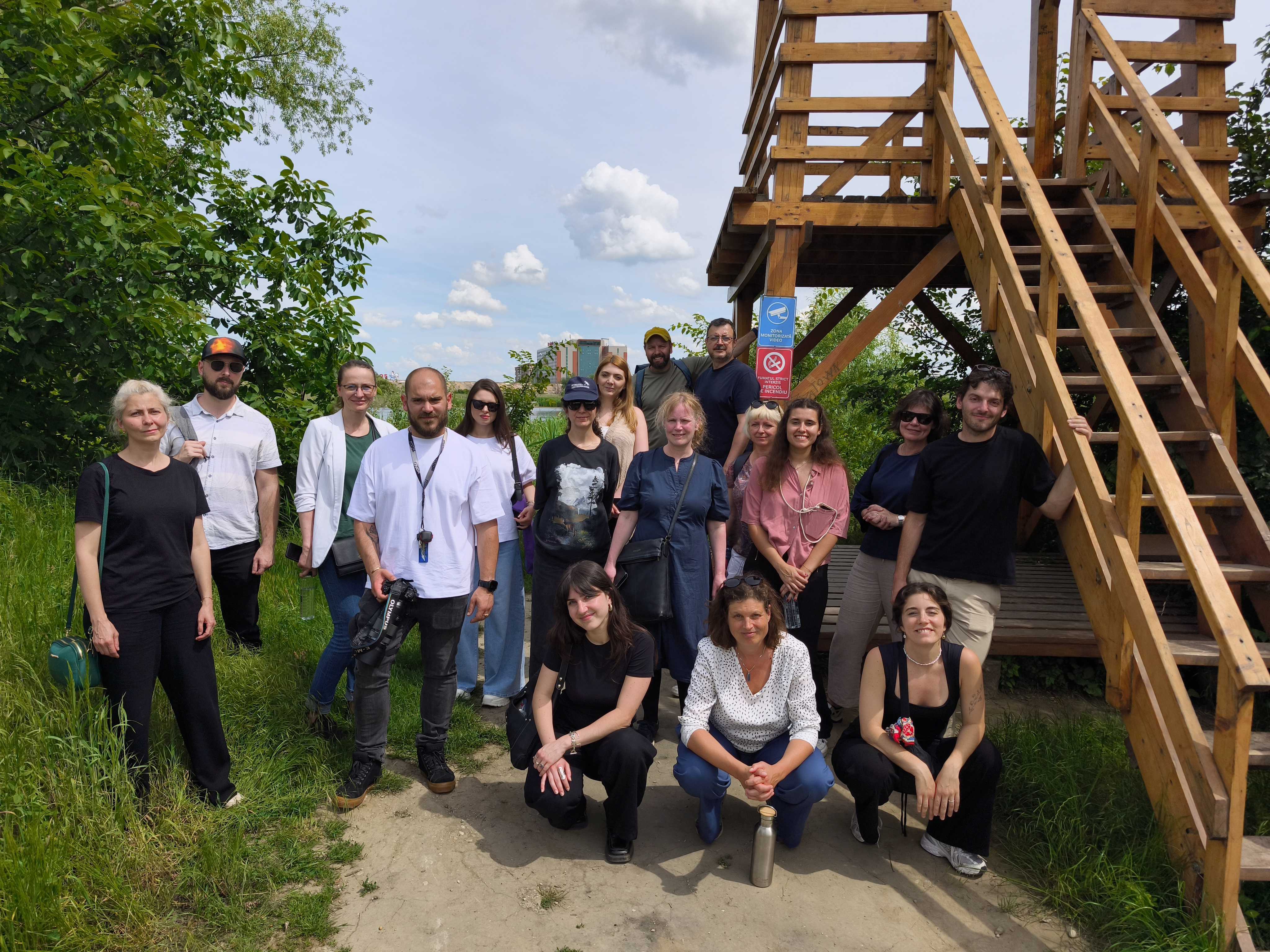
Romania hosted the second Science-Policy Interface (SPI) Dialogue Workshop of BioAgora, an event that took place between 02 and 03 June 2026 at the Botanical Garden in Bucharest. It was meant as a continuation of the format’s first edition in Ghent eight months prior - a platform for direct engagement with and between biodiversity stakeholders. Dialogues of this kind are crucial to BioAgora’s development of an EU Science Service for Biodiversity (SSBD) as the harbinger of a new standard for evidence-based decision-making on the biosphere.
The primary focus at this iteration of the workshop was the Union’s Nature Restoration Regulation (NRR), specifically its implementation via national Action Plans in the Southeast European context. Consequently, a core aim was the facilitation of discussions related to this aspect of the NRR’s realisation that could uncover and unpack implementation gaps, administrative burdens, practical needs as well as opportunities for exchange, coordination and mutual learning. As such, this targeted event attracted participants from key stakeholder groups such as national and European policy-makers, scientific experts, NGO representatives and biodiversity practitioners. On the side of BioAgora, organisational duties were assumed by consortium members from the University of Bucharest, the Leibniz-Institute of Freshwater Ecology and Inland Fisheries (IGB) and the Norwegian Institute for Nature Research (NINA). Also in attendance were contributors to Bridging Minds, a project financed via BioAgora's first Cascade Funding Call.
Proceedings featured four keynote showcases:
-
The NRR assessment process, EU-wide indicators and the relevance of national reporting and plans from Member States - Yurena Lorenzo (EEA)
-
State of development of national Action Plans - Florentina Caramitru (Romania’s Ministry of Environment, Waters and Forests)
-
Policy update: Links between nature restoration, water management and climate adaptation - Anders Iversen (European Commission)
-
Indicators for the NRR reporting - how FAIR is the UN CBD reporting and why does it matter - Joachim Paul Töpper (NINA), representing BioAgora's sister project CO-OP4CBD
In turn, those insights provided a foundation for a number of crucial conversations among attendees. Those were facilitated in interactive formats (world cafés, fishbowl talks and even a board game, the last developed as part of Bridging Minds) to support an exchange of views on challenges, knowledge gaps and opportunities associated with seeing the NRR through on a national level. Ultimately, the deliberation evolved into a broader collective analysis of the ties bridging science, policy and practice and how to strengthen them.
BioAgora was foremost on the minds of presenters and participants alike as the vision behind the SSBD, the project’s primary output, was presented. Specifically, the importance of its mechanisms for enabling responses to policy-based knowledge requests was discussed at length along with their implications for individual EU countries’ biodiversity governance.
Adhering to the spirit of an interactive agenda highlighting practical realities, the workshop also featured two activities in the field:
-
a presentation of Rekosled, a digital application designed to record hydromorphological changes and habitat characteristics in rivers, strengthening data collection and freshwater governance
-
a visit to the Văcărești Urban Nature Park, the largest green space in Bucharest and a testament to the potential of effective restoration efforts to reverse biodiversity decline
Outlooks shared by attendees throughout the two-day programme revealed an eagerness for greater coordination across disciplines, sectors and borders as the Old Continent contemplates the future of the NRR. Consequently, many among them saw the SPI Dialogue workshop as a valuable opportunity for networking and sampling perspectives, advocating for the format’s continuation across Europe.
A retrospective on the SPI Dialogue Workshop in Ghent can be found here. More on the ways to engage with the SSBD (other than via events such as the workshop) is featured on this page.