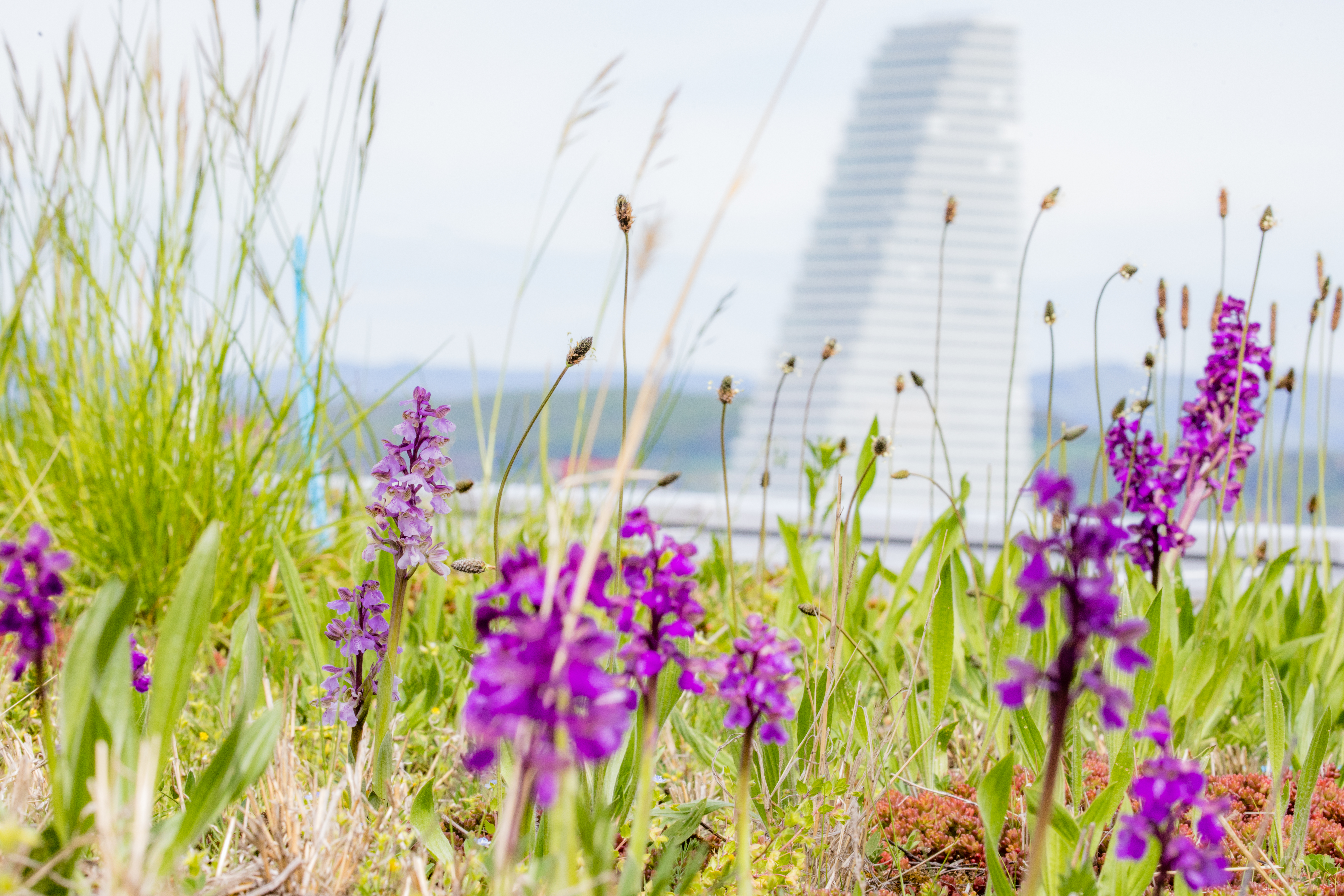
Green roofs and green walls can play a key role in helping European cities address climate change, biodiversity loss and urban heat, according to a new knowledge synthesis report prepared by the Science Service for Biodiversity developed through BioAgora in response to a knowledge request by DG Environment to the EC Knowledge Centre for Biodiversity (KCBD). The report, Implementing green roofs and walls: lessons from European experiences, brings together scientific evidence, expert input and 46 case studies from across Europe to assess how building-integrated greenery can support the implementation of both the EU Nature Restoration Regulation (NRR) and the EU Biodiversity Strategy for 2030, particularly their targets on urban ecosystem restoration/greening.
The analysis shows that green roofs and green walls can deliver multiple benefits, including stormwater retention, reduced urban heat stress, improved building energy performance and increased habitat for urban biodiversity. While extensive green roofs remain the most widely used solution, more complex roof systems and vertical greening can provide greater ecological and social benefits when supported by appropriate design, maintenance and governance.
The report also highlights that wider uptake depends not only on technical solutions but on clear regulations, financing mechanisms and long-term management. Successful examples across Europe demonstrate the value of combining public policies, private investment and community engagement, as well as the importance of integrating green roofs and walls into spatial planning, building codes and urban restoration strategies.
The report provides practical guidance for policymakers, planners and local authorities and contributes to the knowledge base supporting the EU Biodiversity Strategy for 2030, climate adaptation policies and the Nature Restoration Regulation.
Read the full report here.
Photo credit: © Stephan Brenneisen